Quick answer
In the composite vs timber decking choice, timber gives a natural look, a cooler feel underfoot and can be sanded and refinished, but needs regular oiling. Composite needs no oiling and keeps a consistent look, but can get hot in full sun and needs correct expansion gaps. Your sun exposure, budget and appetite for upkeep usually decide it.
Composite vs timber decking is one of the first questions we hear when Adelaide homeowners start planning a new deck. Both make a good outdoor floor. The right choice comes down to how the deck will be used, how much sun it gets, how it should look and how much maintenance you are happy to do each year.
This guide sets out the real differences, without the sales gloss, so you can walk into the design conversation knowing what matters for your home.
The short version
Timber is the natural, classic option, and composite is the low-upkeep, manufactured option. Timber needs oiling or coating to keep its colour; composite does not, but it has its own quirks in heat.
| Factor | Hardwood timber decking | Composite decking |
|---|---|---|
| Look | Natural grain and colour variation, every board different | Consistent colour and pattern, some ranges mimic timber grain |
| Feel in summer sun | Warms up, generally comfortable | Can get hot in direct sun, especially darker colours |
| Ongoing upkeep | Regular cleaning plus periodic oiling or coating | Regular cleaning, no oiling or sanding |
| Rot and termites | Depends on species; durable hardwoods resist both | Resists rot and insects |
| Repairs | Can be sanded back and refinished | Damaged boards are replaced rather than sanded |
| Movement | Moves with moisture | Moves with temperature, needs set expansion gaps |
| Fixing | Face screws, or hidden fixings on some profiles | Usually hidden clips in grooved boards |
| Bushfire-prone sites | Some hardwood species are suited to bushfire-prone areas | Depends on the product’s test results |
| Cost factors | Species, board width, grade, finish | Product range, colour, capped or uncapped boards |
Composite decking pros and cons
Composite boards are made from a blend of wood fibre and plastic, and many current products have a protective outer shell, known as a cap. That make-up is where both the benefits and the drawbacks come from.
The pros
- No oiling. You clean composite, but you do not sand, stain or oil it. For many people, that alone answers whether composite decking is worth it.
- Consistent appearance. Boards come in a uniform colour, so the finished deck looks tidy and even.
- Resistance to rot and insects. Composite does not decay like timber and is not food for termites.
- Clean, screw-free surface. Most composite boards are grooved along the edges for hidden fixing clips, so there are no screw heads on top.
- Splinter-free. A handy point around pools and for families with young children.
The cons
- Heat in direct sun. This is the big one for Adelaide. Composite can get hot underfoot on summer afternoons, and darker colours hold more heat. Lighter shades, or shade from a pergola, help a lot.
- Thermal movement. Composite boards expand and contract with temperature. Manufacturers specify end and side gaps, and these need to follow the installation guide closely, taking into account the temperature on the day the boards go down.
- Some early colour change. Many boards shift slightly in colour after the first period of sun exposure and then settle. Capped products are designed to resist fading and staining better, but performance varies, so read the manufacturer’s information.
- Not refinishable. A deep scratch or burn cannot be sanded out the way it can on timber. The board usually gets replaced.
- Frame requirements. Composite boards often need closer joist spacing than timber. Check the manufacturer’s specifications before planning the subframe.
Timber decking pros and cons
Timber decking in Adelaide usually means an Australian hardwood such as spotted gum or blackbutt, or an imported hardwood such as merbau. Treated pine is also an option on a budget. Each species behaves a little differently, which we cover in our guide to spotted gum vs merbau decking.
The pros
- Natural character. The grain, tones and slight variation between boards are hard to match with a manufactured product.
- Comfort underfoot. Timber still gets warm in the sun, but it generally feels gentler than composite on a hot day.
- Can be refreshed. A tired, grey timber deck can be cleaned, sanded and re-oiled to bring the colour back.
- Durability from the right species. WoodSolutions rates spotted gum as Durability Class 1 above ground, the highest natural durability class under the Australian rating system.
- Bushfire options. Some hardwood species are suited to bushfire-prone areas when the boards meet the required thickness. Check the species and your site’s BAL before choosing.
The cons
- Regular maintenance. Timber needs cleaning and recoating to hold its colour. Left alone, it weathers to a silver-grey and the surface can check (develop small cracks).
- Movement and cupping. Timber moves with moisture, so boards can cup or shrink if the deck is poorly ventilated.
- Tannin bleed. New hardwood, especially merbau, releases tannins that can stain surrounding surfaces in the first months. Coating makers also recommend removing surface tannins and oils before the first coat.
- Variation. Natural colour differences between boards are part of the appeal, but some people prefer a uniform look.
How Adelaide’s climate changes the decision
Adelaide’s hot, dry summers and cooler, wetter winters suit both materials, but they push the decision one way or the other depending on your site.
Full sun, north or west-facing. This is where composite’s heat becomes noticeable. If the deck is uncovered and you want to walk on it barefoot in January, think about a lighter composite colour, a hardwood instead, or adding shade. Many people pair a deck with a pergola over the deck for exactly this reason.
Shaded or covered decks. Under a verandah or pergola, composite’s heat issue mostly disappears and its low upkeep shines.
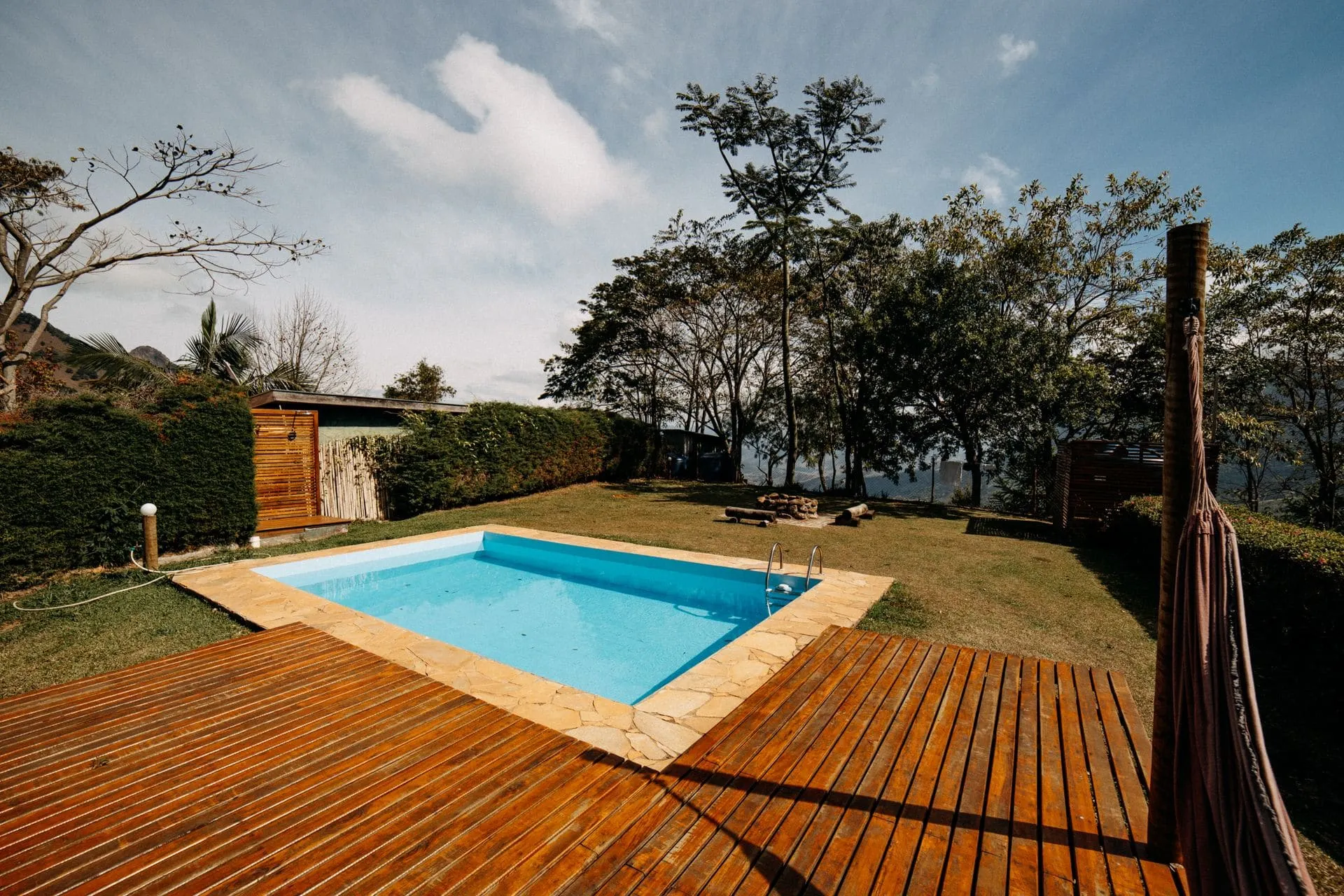
Around pools. Both work. Composite’s splinter-free surface is popular, while hardwood stays more comfortable on bare feet in direct sun. Our pool decking page covers what to think about near water.
Coastal suburbs. Salt air affects fixings more than boards. Use fixings rated for the conditions, whichever board you pick.
Adelaide Hills and other bushfire-prone areas. Your site’s Bushfire Attack Level (BAL) can limit which materials are allowed. Some hardwood species and some composite products have been tested for certain BAL levels, but this is product-specific. Check your BAL and the product’s documentation before deciding.
Maintenance compared over a year
The maintenance gap is real, but it is smaller than many people expect, because both decks need regular cleaning.
Timber deck routine:
- Sweep regularly so leaves and dirt do not hold moisture against the boards.
- Wash with a deck cleaner and a soft broom a few times a year.
- Recoat with a decking oil when water stops beading on the surface. Many owners recoat about once a year, more often on decks in full sun. Check the product’s guidance.
Composite deck routine:
- Sweep regularly, especially between boards.
- Wash with warm soapy water or a cleaner the manufacturer approves.
- Deal with grease and spills quickly, as some products can stain if marks sit for long periods.
For a season-by-season plan, see our guide to deck cleaning and maintenance, and if you choose timber, our step-by-step on how to oil a deck.
What drives the cost of each
We do not publish price ranges because every deck is different, but the factors behind the price are easy to understand.
For timber decking:
- Species (spotted gum, blackbutt, merbau or treated pine)
- Board width, thickness and grade
- Whether you want the deck oiled at completion
- Fixing method (face screwed or hidden fixings)
For composite decking:
- The product range (capped boards usually sit higher than basic boards)
- Board colour and profile
- Matching fascia boards and trims
- Closer joist spacing, if the manufacturer requires it
For both:
- Deck size, shape and height off the ground
- Site access and slope
- Stairs, balustrades and any multi-level sections
- Footings suited to the soil
For more detail on budgeting, read our guide to decking costs in Adelaide.
So which should you choose?
Choose timber if you want a natural look, a cooler feel underfoot in full sun, and you do not mind an annual maintenance routine. Choose composite if low upkeep and a consistent look matter most, and the deck is shaded or you are happy with a lighter colour.
A quick checklist to settle it:
- How many hours of direct sun does the deck area get in summer?
- Will the deck be covered by a pergola or verandah?
- How much time will you realistically spend on maintenance?
- Is the property in a bushfire-prone area?
- Do you prefer natural variation or a uniform finish?
Your next step
If you are still weighing up composite vs timber decking, we can look at your site, talk through the sun and use, and show you sample boards of both. Take a look at our composite decking and timber decking pages, or our overview of decking in Adelaide. When you are ready, call us on 0485 008 292 or use the quote form, and we will get back to you within 24–48 hours.
Sources
Photo is illustrative. This guide is general information for Adelaide homeowners, not engineering, planning or legal advice. Check current requirements with your council or PlanSA before you build.